
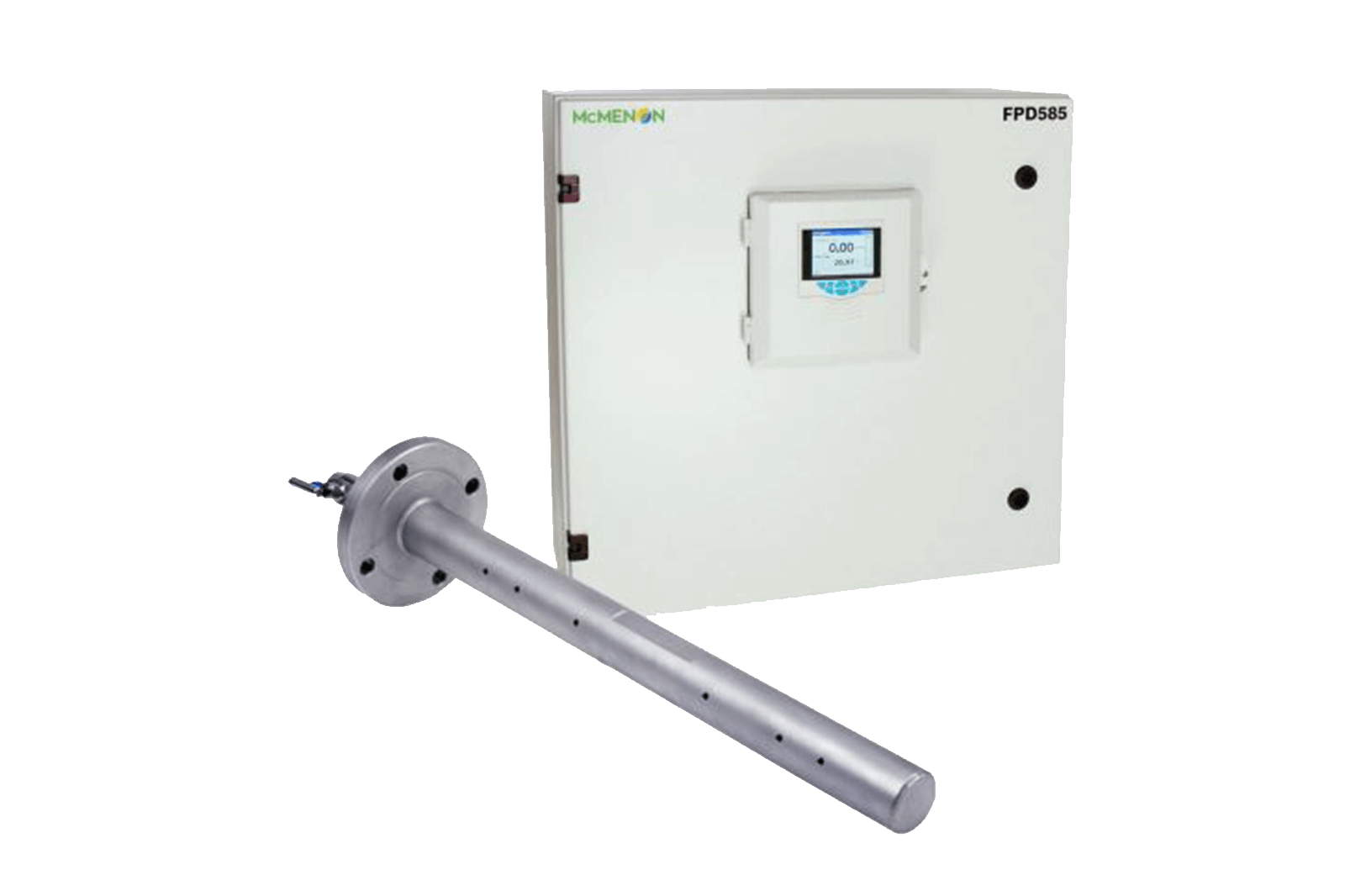


FPD580
Emissions Monitoring Panel – Probe Only FPD581
FlowGenie
Starting from:
$5,000.00
Categories:
A basic stack flow measurement system consisting of just the averaging pitot flow sensor (Torbar) and a DP transmitter, without any automatic purge or control panel. This configuration measures stack gas flow but relies on external instrumentation or manual maintenance for optimal performance.
FPD581 – Rugged Simplicity, Trusted Performance
The FPD581 is an essential emissions monitoring tool for entry-level or lower-demand stack sampling environments. Designed for affordability and simplicity, it supports manual sampling protocols and point-in-time emissions readings across compliant stacks.
An ideal solution for small- to mid-scale plants or non-continuous sampling use cases, the FPD581 reflects Eleven57’s focus on inclusive energy solutions by enabling broader access to emissions monitoring technologies that meet environmental benchmarks.
Applications: spot-check stack sampling, pilot programs, rural plant compliance testing, introductory CEMS framework trials.
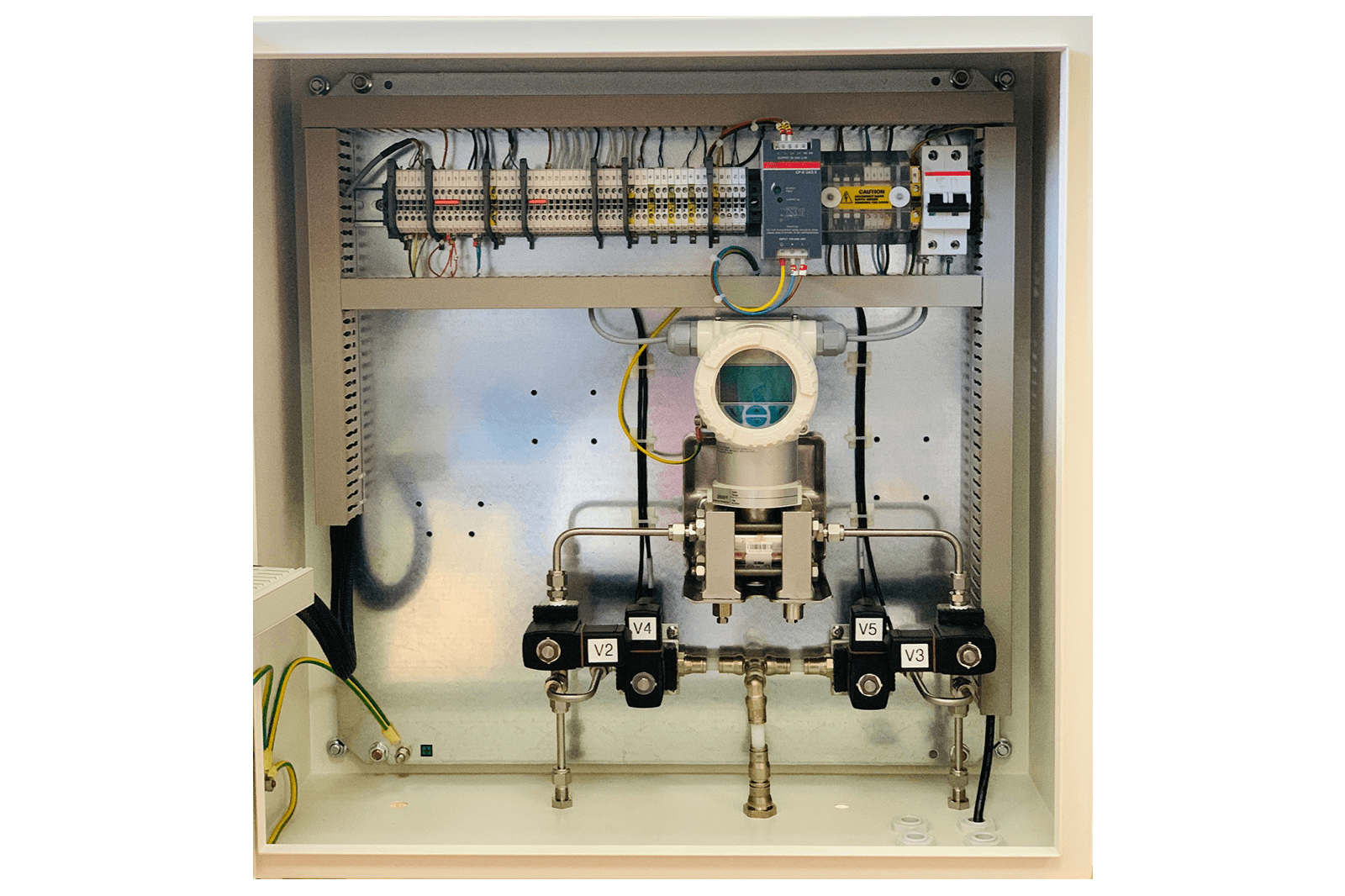
Includes the Torbar probe (1 in or 2 in diameter, custom length to span stack) and typically a differential pressure transmitter that can be mounted locally or remotely. Outputs raw flow DP and temperature signals to the plant’s CEMS or DCS (mass flow calculation done in external software). No purge system or auto-calibration; the probe must be periodically inspected/cleaned by site personnel if particulate build-up occurs. Suitable for relatively clean flue gases or installations where plant staff can frequently maintain the sensor.
🌬️ McMenon Emission FlowGenie – Product Specification Sheet
| Feature | FPD581 | FPD583 | FPD585 |
|---|---|---|---|
| Model Name | FPD581 | FPD583 | FPD585 |
| Compliance | No | EN 14181 / EN 15267-3 (MCERTS Certified) | Designed for MCERTS (Future Option) |
| System Type | Manual | Manual | Automatic |
| Purge Option | No | No | Yes |
| Zero/Span Check | No | No | Yes |
| MCERTS Certified | No | Yes | Future Option |
| Automation Level | None | Low (Manual Interface) | High (Automated Interface Unit) |
| Typical Use Case | Basic applications / probe replacement | Regulated industries requiring compliance | Automated, high-dust environments / remote operations |
| Stack Diameter Range | 1 to 8 meters (3.3 to 26.25 ft.) | 1 to 8 meters (3.3 to 26.25 ft.) | 1 to 8 meters (3.3 to 26.25 ft.) |
| Max Gas Temperature | Up to 1200°C (depends on material) | Up to 1200°C (depends on material) | Up to 1200°C (depends on material) |
| Max Particulate Load | N/A | Recommended up to 30 mg/m³ | Supports up to 300 mg/m³ |
| Output Options | Optional HART / Modbus | HART / Modbus | HART / Modbus / 4–20 mA |
| Transmitter Type | McMenon 267CS Multivariable | McMenon 267CS Multivariable | McMenon 267CS Multivariable |
| Display | Optional LCD | LCD (optional backlit) | Color TFT LCD display |
| Materials | 316L, 321H, or UNS N06625 Gr.2 stainless steel | 316L, 321H, or UNS N06625 Gr.2 stainless steel | 316L, 321H, or UNS N06625 Gr.2 stainless steel |
| Heater Option | No | Optional | Yes |
| Certifications | Optional (FM, CSA, others) | MCERTS, FM, CSA, TÜV | FM, CSA, TÜV (future option) |
Supporting Document
The StackFlowMaster documentation details the composition of the probe-only system and notes that the FPD581 comprises the Torbar and optional transmitter.
Industries & Solutio:ns
Used in emissions or ventilation monitoring scenarios where automation isn’t needed. For example, a natural gas-fired boiler stack (with very low particulate) might use just the probe and transmitter to log flow. Also used when retrofitting flow measurement to an existing CEMS where the plant prefers to integrate the sensor with their own control system. Regular manual inspection or cleaning of the probe is assumed if there is any particulate present.
- Power generation facilities (coal, biomass, natural gas)
- Cement and aggregate processing plants
- Chemical and petrochemical manufacturing
- Steel mills and foundries
- Pulp and paper manufacturing
- Renewable energy systems with combustion processes
- Waste-to-energy and incineration sites
- Environmental compliance contractors and consultants
- Air quality monitoring and emissions verification services
Tools and Resources
No proprietary tools – selection involves choosing the correct probe length/diameter for the stack and a matching transmitter range. The vendor assists by providing flow vs DP data to integrate the probe into the plant’s monitoring system.